


Refrigeration unit inspection: do not confuse decennial maintenance with DESP
The inspection of a refrigeration unit aims to verify the regulatory compliance, safety and operating condition of a refrigeration installation. It concerns pressure equipment (compressors, vessels, piping), safety devices and personnel protection systems. The operator is legally required to have these inspections carried out by an authorised body at frequencies defined by the DESP regulation and the French decree of 20 November 2017.
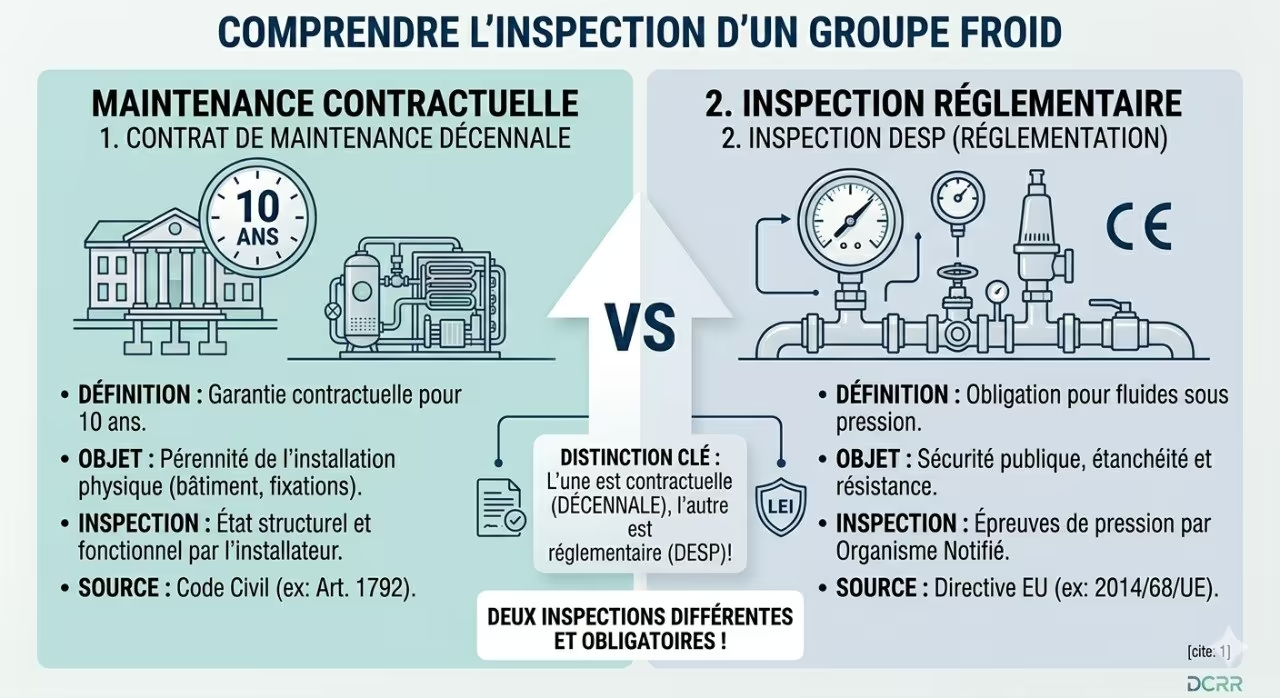 Figure 1: Decennial maintenance (contractual) and DESP inspection (regulatory) are two distinct and complementary obligations.
Which equipment is inspected on a refrigeration unit?
An industrial or commercial refrigeration unit includes several pressure equipment items subject to inspection:
- Compressors: discharge pressure casing, shaft seals, service valves
- Refrigerant liquid receivers: high pressure and low pressure, with their safety devices
- Oil separators: under discharge pressure
- Exchangers and condensers: water, air or evaporative, depending on their pressure and volume
- Piping: discharge, suction, liquid and expansion lines
- Safety devices: safety valves, rupture discs, fusible plugs, pressure gauges
- Accessories: valves, shut-off valves, expansion valves, filters, sight glasses
DESP submission thresholds
Equipment falls under the DESP (2014/68/EU) and the French decree of 20 November 2017 when:
- Its maximum allowable pressure (PS) exceeds 0.5 bar
- Its volume or nominal dimension exceeds the thresholds of Annex II
- It contains a refrigerant classified according to its hazard level
Categories range from I to IV. Most industrial refrigeration units (ammonia, CO₂, HFC) fall into category II or III.
Decennial maintenance vs DESP requalification: the costly confusion
Decennial maintenance (maintenance contract)
Decennial maintenance is a commercial contract between the operator and a refrigeration technician or installer. It generally provides for:
- Regular maintenance visits (every 3, 6 or 12 months depending on the contract)
- Replacement of wear parts (filters, gaskets, oil)
- Breakdown repair
- Refrigerant filling
- Sometimes a more thorough decennial overhaul (hence the name)
Key point: Decennial maintenance is a service contract. It does not constitute a regulatory inspection. The refrigeration technician who maintains the installation is not necessarily an authorised body, and their intervention does not produce a valid inspection report in the eyes of the DESP regulation.
DESP requalification
Requalification is an in-depth control operation carried out by an authorised body (OH). It aims to:
- Verify the regulatory compliance of pressure equipment
- Detect degradation (corrosion, fatigue, leaks)
- Ensure the proper functioning of safety devices
- Establish a requalification report with any prescriptions
Periodicity (CTP refrigeration 2026):
- Requalification: 6 years max (toxic fluids), 12 years max (other fluids)
- Periodic inspection: 24 months max (category IV), 48 months max (category II or III)
Comparison table
| Criterion | Decennial maintenance | DESP requalification |
|---|---|---|
| Nature | Commercial contract | Regulatory obligation |
| Intervenant | Refrigeration technician / installer | Authorised body (OH) |
| Objective | Operation, maintenance | Compliance, safety |
| Document | Intervention sheet | Requalification report, inspection plan |
| Periodicity | Variable (contract) | 24-48 months (inspection), 6-12 years (requalification) |
| Legal consequence | None | Formal notice, shutdown if absent |
The mistake not to make
Many operators think that their decennial maintenance contract covers the DESP inspection obligation. This is a frequent and dangerous mistake:
- The refrigeration technician who maintains the installation is not an authorised body
- The maintenance intervention sheet does not replace the OH’s requalification report
- The absence of periodic inspection and DESP requalification exposes the operator to sanctions despite an ongoing maintenance contract
- The labour inspectorate checks for the presence of periodic inspection and requalification reports, not maintenance sheets
Golden rule: Maintenance and inspection are complementary but distinct. One ensures operation, the other ensures regulatory compliance. Both are necessary.
Regulatory framework for refrigeration unit inspection
The DESP (2014/68/EU)
The European directive imposes design and manufacturing rules on pressure equipment. For categories III and IV, a notified body intervenes during manufacturing. But once the equipment is in service, it is the French decree of 20 November 2017 that governs inspections.
The French decree of 20 November 2017
This decree transposes the operating obligations for pressure equipment in France. It requires:
- The constitution of an equipment file
- The appointment of an operation manager
- Periodic inspections by an authorised body
- Preventive maintenance of safety devices
- Training of operating personnel
The CTP refrigeration 2026
The Professional Technical Document (Cahier Technique Professionnel — CTP) for refrigeration, 2026 edition, specifies the inspection procedures for refrigeration installations. It defines:
- Control frequencies according to equipment category
- Mandatory inspection points (pressure switches, valves, supports)
- Specific requirements for A2L fluids
- The format of the inspection plan and reports
The EN 378 standard
For refrigeration installations, the EN 378 standard (parts 1 to 4) complements the DESP regulation by specifying:
- Design and construction requirements
- Refrigerant charge limits per zone
- Personnel protection devices
- Operating and maintenance procedures
Mandatory inspection frequency
Types of controls and periodicity (CTP refrigeration 2026)
| Type of control | Content | Maximum periodicity (CTP 2026) |
|---|---|---|
| Periodic inspection | Visual inspection, safety devices, supports, HP pressure switches, non-condensable gases | 24 months (category IV), 48 months (category II or III) |
| Requalification | Pressure equipment, pressure test, resistance calculation | 6 years (toxic fluids), 12 years (other fluids) |
Source: CTP refrigeration 2026, chapters A.4.1, A.5.2, C.3.2, C.3.3.2, E.9
Factors influencing periodicity
The authorised body sets the exact frequency based on:
- The category of the equipment (I to IV)
- The nature of the fluid: ammonia (R717), CO₂ (R744), HFC, HFO, A2L
- The operating conditions: temperature, cycling, corrosion
- The maintenance history and results of previous controls
- The age of the installation and modifications undergone
Special cases
- Ammonia refrigeration unit (R717): periodic inspection every 48 months maximum (category II or III), but often reduced to 24 months due to the toxicity of the fluid; requalification every 6 years
- CO₂ refrigeration unit (R744): standard periodicity but beware of high pressure (transcritical systems)
- Refrigeration unit with A2L fluid (R454C, R455A, R452B): reinforced inspection of detection and ventilation devices
- Modified installation: new initial verification after any major modification
Operator responsibilities
Legal obligations
The operator of a refrigeration unit is responsible for the safety of their installation. They must:
1. Constitute and keep the equipment file up to date
- Original plans and successive modifications
- Material certificates and test reports
- Acceptance reports and commissioning reports
- Maintenance register and maintenance sheets
- Periodic inspection and requalification reports
2. Appoint an operation manager
- Competent person trained in regulations
- Having the authority to enforce instructions
- Available in case of emergency
3. Carry out periodic inspections and requalifications
- Contract with an authorised body
- Respect of the frequencies set in the last report
- Execution of prescribed works within the set deadlines
4. Ensure preventive maintenance
- Monthly check of safety devices (valves, rupture discs)
- Verification of supports, anchors and fixing devices
- Control of measuring devices (pressure gauges, thermometers)
- Maintenance of leak detection and alarm systems
5. Train personnel
- Operating personnel: start-up/shutdown procedures, anomaly management
- Maintenance personnel: authorised interventions, safety instructions
- All personnel: risk awareness, evacuation procedures
Risks and consequences of neglected periodic inspection
Technical risks
- Refrigerant leak: loss of charge, pollution, toxic risk (ammonia) or asphyxiation (CO₂)
- Explosion or rupture: overpressure, corrosion, material fatigue
- Fire: flammable fluids (A2L, A3), electrical failure
- Production stoppage: refrigeration unit breakdown, loss of cold chain
Legal risks
- Formal notice by the labour inspectorate
- Shutdown of the installation or site
- Administrative fines: up to €75,000 for a legal entity
- Criminal liability: in case of accident, imprisonment up to 3 years and fine up to €45,000
- Civil liability: compensation for victims, loss of insurance
Economic risks
- Loss of production and turnover
- Cost of urgent compliance restoration
- Loss of quality certification (IFS, BRC, ISO 9001)
- Reputational damage and loss of customers
Frequent mistakes on the ground
1. Confusing maintenance and periodic inspection
Contractual maintenance (maintenance contract with a refrigeration technician) does not replace periodic inspection by an authorised body. Maintenance deals with operation; periodic inspection verifies regulatory compliance and structural safety.
2. Forgetting small equipment
Oil separators, recycling vessels, small-diameter discharge piping also fall under the DESP. Their exclusion from the inspection plan exposes the operator to a formal notice.
3. Not keeping the equipment file up to date
The file is often incomplete, scattered between several departments, or lost during a change of operator. Without a file, the labour inspectorate may prescribe a shutdown until reconstruction.
4. Underestimating A2L fluids
Replacing an A1 fluid with an A2L (R454C, R455A, R452B) requires a new EN 378 risk analysis and an update of safety devices. The inspection must verify the compliance of these modifications.
5. Postponing prescribed works
An inspection report often prescribes works (replacement of a valve, repair of a leak, reinforcement of a support). Postponing them exposes to an increased risk and sanctions in case of control.
Field case: 800 kW cold storage warehouse
Context
Food distribution warehouse, 80 employees, 4 ammonia refrigeration units (R717), storage temperature -25°C, 15-year-old installation.
Inspected equipment
- 4 screw compressors (category III, fluid group 1)
- 8 oil separators and liquid receivers (category II and III)
- Discharge and suction piping (category I to III)
- 12 safety valves, 4 rupture discs
- Fixed and portable ammonia leak detectors
Problems identified during inspection
- Safety valve on the main vessel: non-compliant, replaced by an unsuitable model during an emergency intervention
- External corrosion on 2 oil separators: peeling paint, rust traces under the supports
- Incomplete equipment file: original plans missing, material certificates untraceable
- Leak detectors: 2 out of 6 non-functional, calibration overdue by 18 months
- Personnel: 2 out of 4 operators not trained in ammonia emergency procedures
Corrective actions
- Replacement of safety valves with models compliant with the category
- Sandblasting and repainting of separators, reinforcement of supports
- Reconstruction of the equipment file with the original installer
- Replacement and calibration of leak detectors
- Training of all personnel in ammonia risks and evacuation procedures
Result
- Compliance obtained in 3 months
- Periodic inspection scheduled in 24 months
- 40% reduction in leak alarms thanks to preventive maintenance
Refrigeration unit inspection checklist
Before inspection
- Complete and up-to-date equipment file
- Maintenance register for the last 12 months
- Reports from previous periodic inspections and requalifications
- Inspection plan established with the authorised body
- Operating personnel available and informed
During inspection
- Presence of the operation manager
- Free access to all equipment
- Plans and certificates made available
- Shutdown of units if necessary for tests
- Lockout of safety devices
Mandatory inspection points CTP 2026
- HP safety pressure switches: verification of adjustment less than 12 months old (certificate, report, certificate)
- Non-condensable gases: direct or indirect control less than 12 months old
- Exchangers: visual control of the external wall or analysis of the secondary fluid (pH) less than 12 months old
- Safety devices (valves, rupture discs): condition and compliance
- Supports and anchors: absence of corrosion, correct fixing
- Piping: absence of cracks, corrosion, abnormal vibrations
- Compressors: oil levels, gaskets, vibrations
- Leak detectors: operation and calibration
- Maintenance register: completeness of the last 12 months
After inspection
- Reading of the inspection report within 15 days
- Planning of prescribed works
- Update of the equipment file
- Informing personnel of new instructions
- Preparation of the next periodic inspection
FAQ: refrigeration unit inspection
What is the difference between maintenance and periodic inspection?
Maintenance is a technical contract with a refrigeration technician to ensure operation (breakdown repair, adjustments, refrigerant filling). Periodic inspection is a compliance and safety control carried out by an authorised body, independent of the installer. Both are mandatory and complementary.
What is the inspection frequency of an ammonia refrigeration unit?
An ammonia refrigeration unit (R717, toxic fluid) is subject to a periodic inspection every 48 months maximum (category II or III), often reduced to 24 months due to the toxicity of the fluid. Requalification is carried out every 6 years maximum. The exact periodicity is set by the authorised body in the inspection plan.
Can an authorised body be the same as the refrigeration technician who maintains the installation?
No. The authorised body must be independent of the installer and the operator. It is accredited by the French authority to carry out periodic inspections. The refrigeration technician who maintains the installation may be the same as the one who installed it, but cannot carry out regulatory inspections.
What happens if I do not have my refrigeration unit inspected?
The absence of periodic inspection exposes the operator to a formal notice, a shutdown of operation, and fines (up to €75,000). In case of accident, the operator incurs criminal liability (imprisonment and fine) and civil liability (compensation for victims). Insurance may also refuse to cover the claim.
How do I know if my refrigeration unit falls under the DESP?
A refrigeration unit falls under the DESP as soon as its pressure equipment exceeds the thresholds of Annex II (PS > 0.5 bar + volume or nominal dimension above the thresholds). In practice, most industrial and commercial refrigeration units fall under the DESP. An expert can carry out a compliance diagnosis to identify the concerned equipment and categories.
Summary
The inspection of a refrigeration unit is a regulatory obligation governed by the DESP (2014/68/EU) and the French decree of 20 November 2017. It concerns pressure equipment (compressors, vessels, piping, safety devices) and must be carried out by an authorised body at frequencies defined by the CTP refrigeration 2026: periodic inspection every 48 months maximum (category II or III), 24 months maximum (category IV), requalification every 6 years (toxic fluids) or 12 years (other fluids). The operator is responsible for constituting the equipment file, preventive maintenance, personnel training and the execution of prescribed works. The risks of neglected inspection are serious: administrative and criminal sanctions, production shutdown, civil liability. Frequent mistakes — confusion between maintenance/periodic inspection, forgetting small equipment, incomplete file, underestimation of A2L fluids, postponement of works — can be avoided by rigorous organisation and advance planning.
Need a compliance audit of your refrigeration unit? DCRR carries out regulatory inspections and compliance diagnostics for industrial and commercial refrigeration installations. Contact us to schedule a visit.