


PED File: Our 100% Reliable & Exclusive Support

The safety of refrigeration installations is paramount, especially when it comes to pressure equipment. The Pressure Equipment Directive (PED) governs this safety in Europe.
But what is the PED file, and why is it essential for operators? This article provides a comprehensive overview to understand and implement this indispensable file.
What is the Pressure Equipment Directive (PED)?
European Directive 2014/68/EU, known as PED, establishes minimum safety requirements for placing pressure equipment on the market.
Its main objective is to prevent risks associated with this equipment, thereby ensuring the protection of property and people. Compliance with this directive is attested by CE marking, allowing the free movement of equipment within the European Union.
Scope of the PED
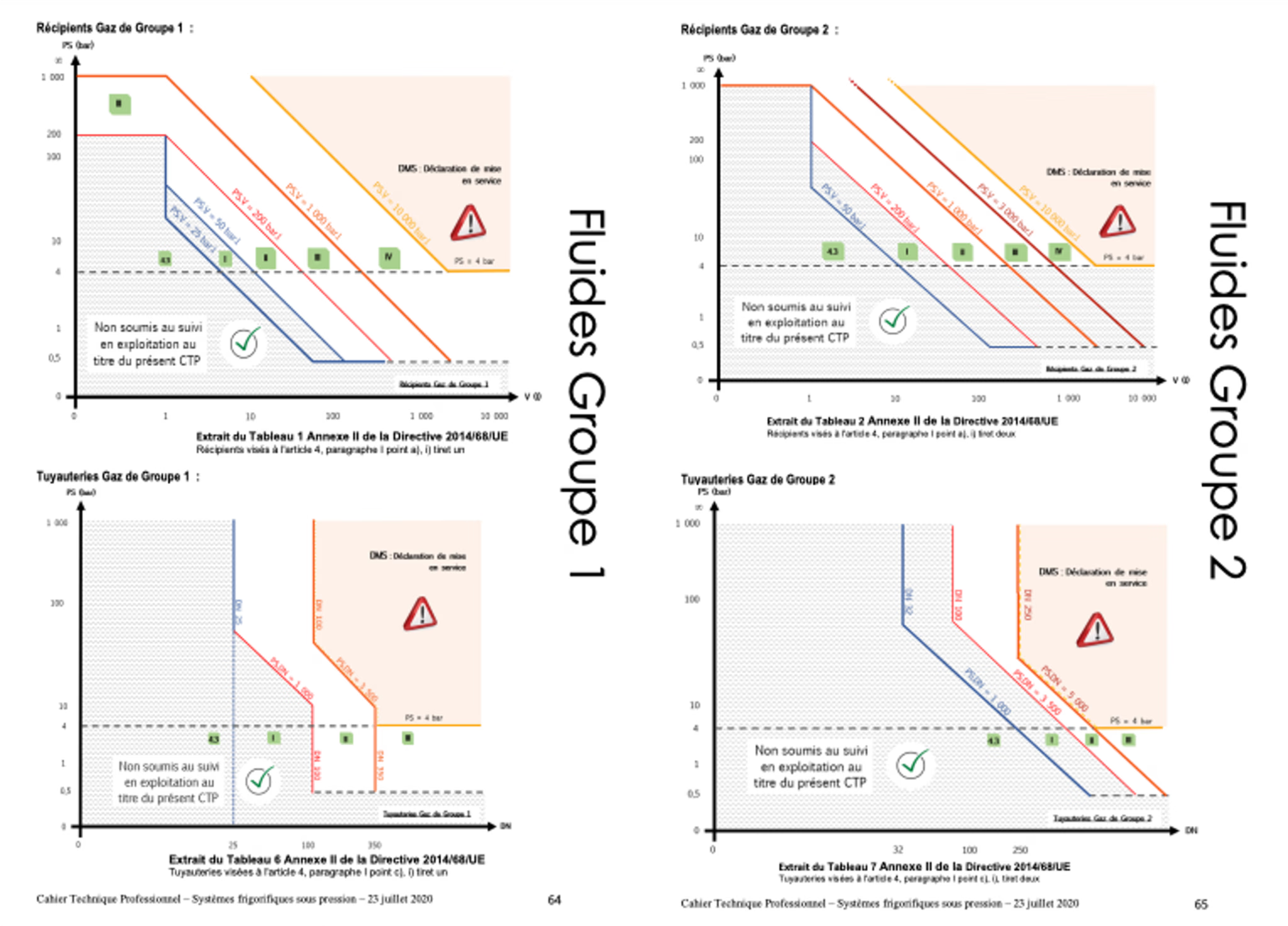
The PED applies to a variety of equipment operating at a pressure greater than 0.5 bar, such as:
- Reservoirs: Liquid hammer arrestor, Liquid Receiver, Oil Reservoir, Oil Separator, etc.
- Piping
- Heat exchangers
These equipment, due to the high pressures they contain, present significant risks in case of failure.
The PED File: Definition and Importance
The PED file is a set of documents attesting to the conformity of pressure equipment with the requirements of the directive.
It constitutes essential proof during regulatory inspections and must be kept throughout the life of the equipment.
Contents of the PED file
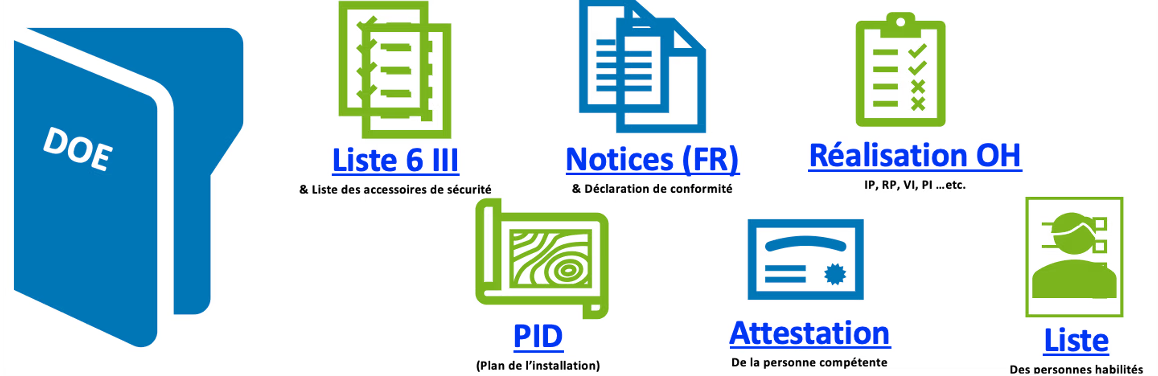
A complete PED file generally includes:
- CE certificates of conformity
- Technical plans and diagrams (P&ID, Layout, etc.)
- Calculation notes justifying the relief valves (installation)
- Inspection procedures and inspection deadlines (inspection plan)
- Reports of periodic inspections and requalifications
- Initial verification
- The list of equipment subject to in-service monitoring (AM 20/11/2017 – Art.6.3)
These documents guarantee traceability and transparency regarding the design, manufacture, and operation of the equipment.
Operator Responsibilities
It is the operator’s responsibility to:
- Create and keep the PED file up to date
- Ensure that the equipment is used in accordance with the manufacturer’s specifications
- Organize periodic inspections and maintenance
- Collaborate with notified bodies for regulatory controls
An incomplete or outdated PED file can lead to sanctions and compromise the safety of installations.
Solutions for PED File Management
Effective management of the PED file can be complex. Fortunately, solutions exist to facilitate this task.
Dedicated digital platforms
Tools like cDESP by DCRR offer centralized and digital management of PED files. These platforms allow:
- Fast and secure access to documents
- Real-time updating of information
- Tracking of inspection and maintenance deadlines
- Reduction of administrative error risks
cDESP presentation video
By opting for a digital solution, operators optimize document management and ensure better regulatory compliance.
Expert support
Calling on specialists, such as DCRR, allows you to benefit from recognized expertise in the preparation and monitoring of PED files. These experts offer:
- Performance of regulatory controls (Initial Visit, Periodic Inspection)
- Development of customized inspection plans
- Support during interventions by notified bodies
- Training to raise team awareness of PED regulatory issues
This collaboration ensures optimal compliance and peaceful management of pressure equipment (PE).
Best Practices to Ensure Compliance
To maintain continuous compliance with the PED, it is recommended to:
- Regularly train personnel on the requirements of the directive
- Implement regulatory monitoring to anticipate changes
- Use appropriate document management tools
- Plan internal audits to verify the effectiveness of procedures
- Collaborate closely with control bodies and domain experts
These proactive measures help strengthen the safety of installations and avoid non-compliances.
Conclusion
The PED file is a central element in guaranteeing the safety and compliance of pressure equipment. Its rigorous management is essential to prevent risks and meet regulatory requirements.
By relying on digital solutions and the expertise of professionals like DCRR, operators can simplify the creation and monitoring of their PED file. Effective management of this file not only ensures regulatory compliance but also guarantees the safety of installations and the peace of mind of operators.
Additional Resources
To deepen your knowledge or start bringing your pressure equipment into compliance, here are some useful resources:
- Our technical compliance solutions offered by us
- Contact a DCRR expert
- Consult regulations on Légifrance
- Consult regulations on Eurlex
- Consult the refrigeration CTP
- Our LinkedIn with the latest regulatory news
FAQ: Frequently Asked Questions about the PED file
How long should a PED file be kept?
The file must be kept throughout the life of the equipment, or even longer in case of replacement or transfer of responsibility.
Can the management of a PED file be outsourced?
Yes, it is entirely possible to delegate this mission to a specialized company like DCRR, which offers comprehensive support from the initial audit to the digital management of the file.
What are the risks in case of an incomplete PED file?
Risks include:
- Fines
- Shutdown of operations
- Loss of insurance
- Legal proceedings in case of an incident involving the pressure equipment
What types of equipment require a PED file?
All equipment operating at a pressure greater than 0.5 bar, notably:
- Hermetic compressors
- Reservoirs
- Separators
- Piping
- Heat exchangers
- Safety accessories
Source: The DCRR team